
China's Self-Developed AI Chip Achieves Architectural Breakthrough – 520 TFlops at 14nm
On July 13, China's first AI chip employing software-defined and 3D near-memory computingtechnologies was officially unveiled in Shanghai. Developed by Dongfang Suanxin, the DF1000 chip delivers 520 trillion floating-point operations per second on a 14nm process – achieving high-end computing power through architectural innovation rather than advanced manufacturing processes.
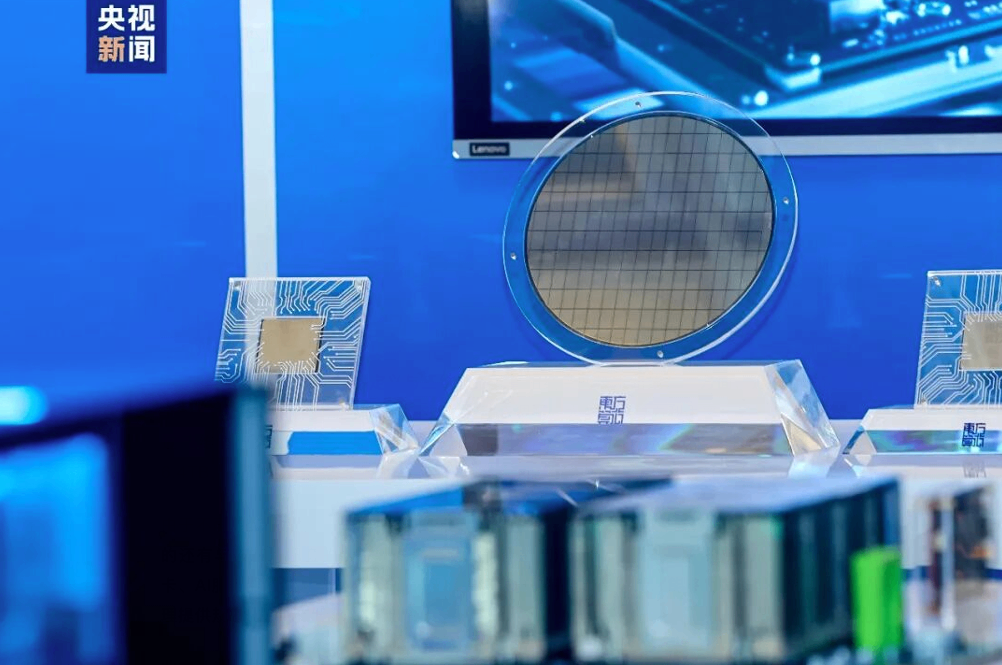
The chip adopts a "software-defined + 3D stacked near-memory computing" approach. Software-defined technology enables dynamic hardware resource allocation for enhanced utilization efficiency, while 3D vertical stacking brings computing and storage units into close proximity, achieving 6.4TB/s memory bandwidth – fundamentally alleviating the longstanding "memory wall" bottleneck.
Dongfang Suanxin founder Wei Shaojun explained that previous computing chip roadmaps fell into two categories – DSA (Domain-Specific Architecture) lacked flexibility amid rapid AI algorithm evolution, while GPGPUs remained heavily dependent on advanced manufacturing processes, vulnerable to geopolitical disruptions. The "third path" combining software-defined and 3D near-memory computing does not rely on cutting-edge process technology, offering a more stable and controllable supply chain.
The accompanying full-stack software toolchain supports mainstream deep learning frameworks, forming a complete product ecosystem from individual accelerators and AI servers to liquid-cooled supernodes and large-scale computing clusters. DF1000 will make its debut at WAIC 2026and is expected to enter mass production in the second half of this year.
#ChinaAI #AIchip #DF1000 #softwaredefinedchip #computingbreakthrough #WAIC2026