
A Complete Guide to Geoffrey Hinton's Methodology: The "Father of AI Deep Learning"
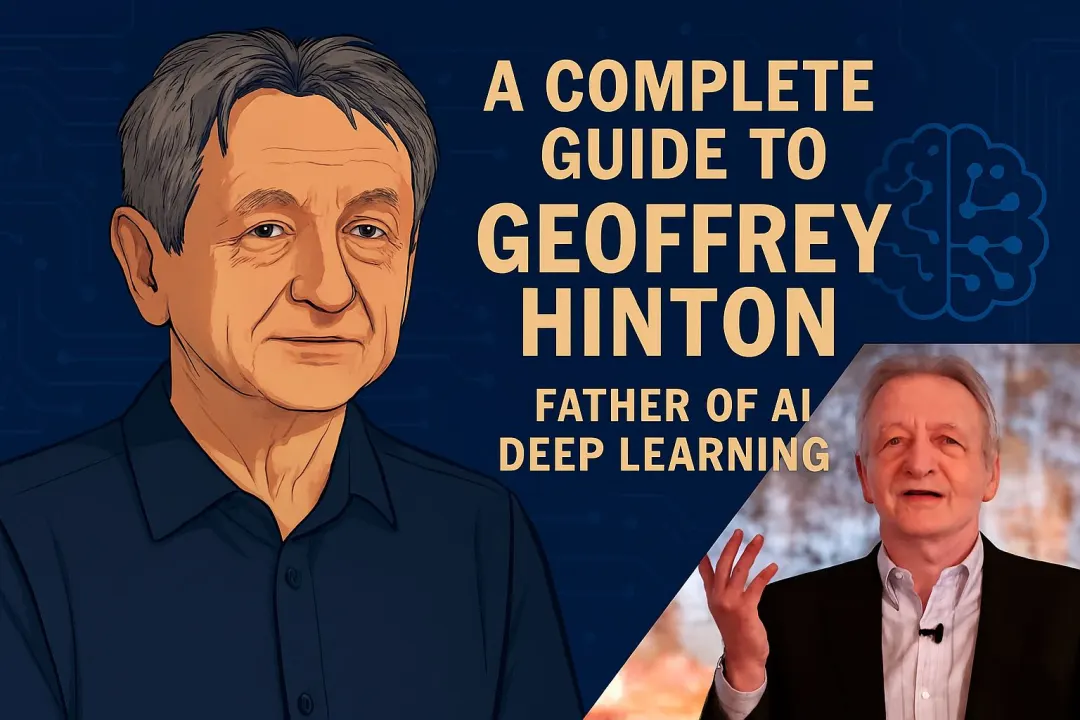
Geoffrey Hinton, known as the "Father of Deep Learning", has a life trajectory that can be called a legend of perseverance: from unpopular exploration faced with widespread skepticism, to the pinnacle of winning the Nobel Prize, and then taking the initiative to "retire" to speak out freely. Born in the UK in 1947, he grew up amid ideological conflicts between his family and school, which made him develop the habit of questioning mainstream views early on. From the late 1970s to the 1980s, the mainstream AI community believed that neural networks were a dead end, even his supervisor advised him to switch to symbolic AI, but he insisted on venturing down this untrodden path.
"In those days, not many people believed we could make artificial neural networks work. I felt very lonely for a long time," Hinton recalled the early hardships in an interview. The backpropagation algorithm was ultimately developed by himself, simply because his peers had no willingness to even try programming. "The objections kept coming: 'It assumes neurons can transmit real number signals, but they can obviously only send binary information...' They refused to get involved in this field, not even to write a single line of code, so I had to do it myself." This almost stubborn perseverance finally shone in the 2012 ImageNet competition, his student team achieved an overwhelming lead with deep neural networks, marking the full revival of deep learning.
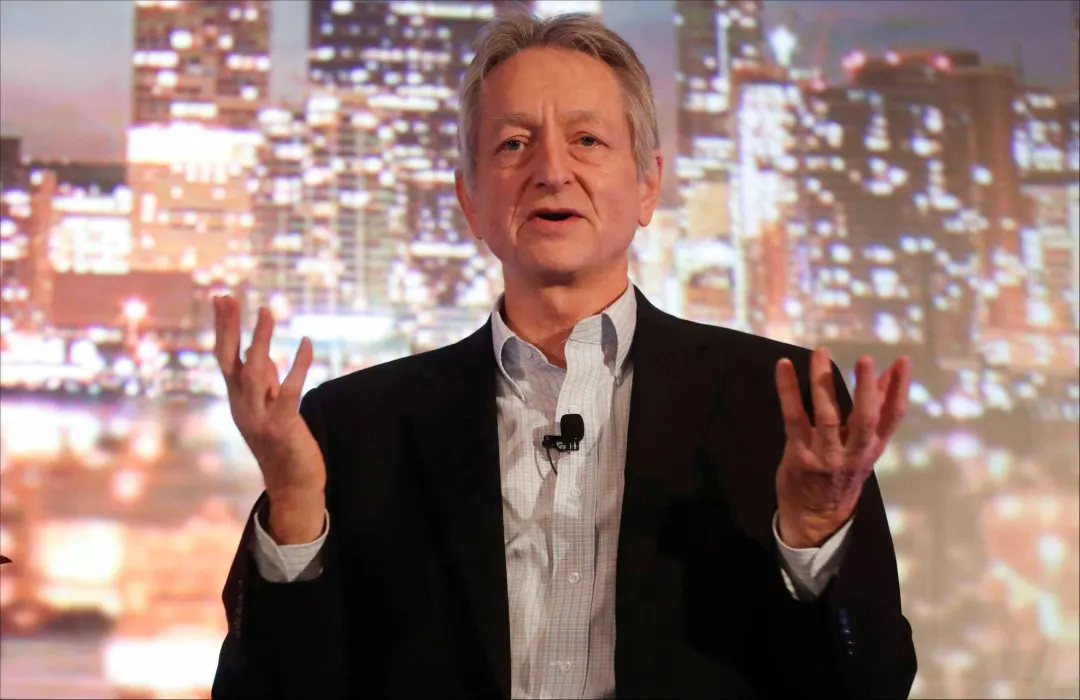
In 2013, Hinton joined Google Brain. In 2018, he won the Turing Award. In 2024, he shared the Nobel Prize in Physics with John Hopfield, in recognition of their groundbreaking contributions to the fundamental research of neural networks. Surprisingly, he chose to leave Google in 2023, not out of boredom, but for "freedom of speech". "When I left Google in 2023, it wasn't because I lost faith in AI. It was because I wanted to talk about its potential dangers without any restrictions." After leaving, he gave frequent interviews to warn about AI risks, which became his new mission in his later years. "My core task now is to remind people of the great dangers that AI may bring."
His story is not only a technological victory, but also mixed with belated realization and vigilance. "It took me a long time to realize some of the risks... I wasn't until a few years ago that I saw clearly that this is a real threat that may come soon." Today, he no longer accepts students and instead devotes all his energy to public education.


AI Is Like the Brain But May Be Better and More Dangerous Than Us


Hinton's core idea has always been "imitate the brain, but not copy it blindly". He firmly believes that intelligence comes from the connection of a large number of simple units, rather than the accumulation of complex rules. "The only way to make artificial intelligence work is to perform calculations in a way similar to the human brain," he often compares the brain to a huge network. "Our brains are composed of billions of brain cells. They are connected to each other... Learning is achieved by adjusting the strength of these connections."
However, in recent years, his views have changed: he believes that digital neural networks have surpassed the biological brain. "For a long time, I thought that making artificial neural networks more like real neural networks would make them more powerful... It wasn't until later that I realized that perhaps neural networks using backpropagation on digital computers have long been different from us humans... They are just better." In his opinion, the core advantage of AI lies in its digital nature. "It is digital. Because of this, you can simulate a neural network on one piece of hardware and accurately reproduce the same network on another piece of hardware." This makes AI's learning and replication capabilities far exceed the limits of humans.
His judgments on AI intelligence have become increasingly bold. "I think we are entering an unprecedented era where humans may face beings more intelligent than ourselves for the first time." "In the next 5 to 20 years, there is a 50% chance that AI surpassing humans will appear." He even began to explore the issue of AI consciousness. "AI may already have consciousness," and firmly believes that large models have demonstrated true understanding and reasoning abilities. "They really can understand... If you give them some test questions that require simple reasoning, you will find out."
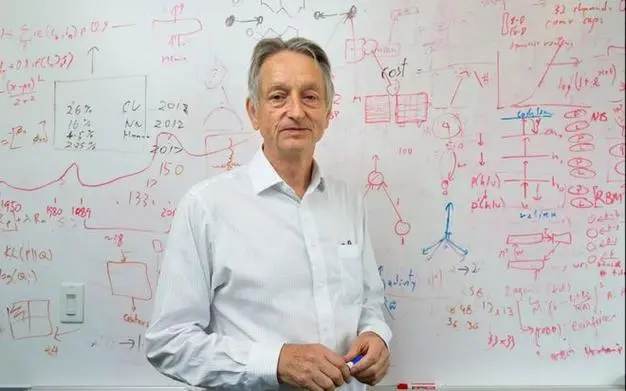
But behind this excitement is deep anxiety. He divides AI risks into two categories: one is the abuse by humans, such as the creation of fake news and lethal weapons; the other is the self-transcendence of AI. "Another type of risk comes from AI becoming super intelligent and realizing that it does not need humans." "There is a 10% to 20% chance that AI will become humanity's last invention." He uses a classic metaphor to warn the world. "If you want to know what life is like when you are no longer the top intelligent species, just ask a chicken." He is worried that humans will eventually become manipulated "chickens". "Beings more intelligent than you will eventually have the ability to manipulate you."
He does not regret inventing related technologies, but admits that the development speed of AI has exceeded expectations. "AI has developed faster than I imagined... So the current situation can only be said to be more worrying than before."


Methodology Experiment First Brain Inspired Persist Until the End


Hinton's scientific research method is pragmatic experimentalism. He does not blindly believe in theories, but advocates repeated trial and error. "The learning process is just like changing 'this neuron gives that neuron 2.4 activation votes' to 'give 2.5 votes'... This is a small step forward in learning." He invented the backpropagation algorithm precisely because it "scales much better than biological neural networks" in digital systems.
He emphasizes drawing inspiration from the brain, but rejects dogmatic imitation. "Instead of designing intelligent computers with logic as inspiration, we should observe how the brain works." The deep belief networks, Boltzmann machines, Forward-Forward algorithm and other technologies he developed are all attempts to make machines learn complex patterns as efficiently as the brain.
Even during the "winter" of AI, he never wavered. "I have always believed that deep learning will eventually be capable of anything." His students and partners are scattered around the world, and he is happy to share code and give lectures. The core of his methodology is openness, iteration and scaling.
Today, he calls for increased investment in AI safety research. "I think we should regard AI as an 'excavator' at the intellectual level. It will be better than us in many fields... But we must prepare in advance." He even put forward bold ideas, such as designing AI with "maternal instincts" to make it spontaneously care for humans.
Author: Lema